 ISO: 9001 : 2015 Certified
ISO: 9001 : 2015 Certified
ISO: 9001 : 2015 Certified
ISO: 9001 : 2015 Certified
ISO: 9001 : 2015 Certified
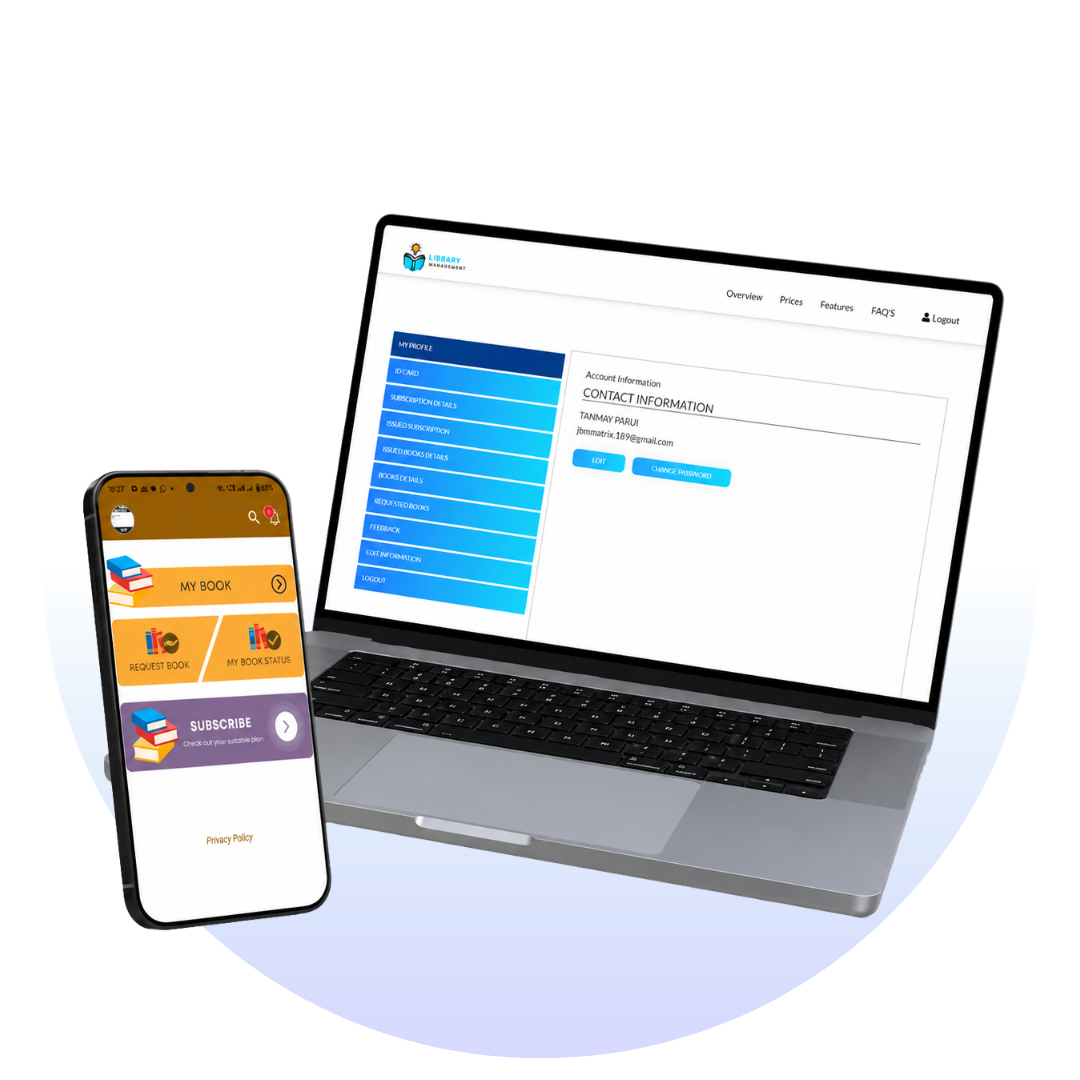
Library Management System
JBMatrix Library Management System helps schools, colleges, institutions and organizations digitally manage their library operations.
The system can automate book cataloguing, member management, book issue and return, reservations, fines and library reporting.
Key Features Of Library Management Software
01
Book Catalogue
02
Author & Publisher Management
03
Category Management
04
Member Management
05
Book Issue
06
Book Return
07
Book Reservation
08
Due-Date Management
09
Fine Calculation
10
Barcode Support
11
Book Search
12
Inventory Management
13
Notifications
14
Reports
15
User Management
Who Is It For?
Schools
Colleges
Universities
Corporate Libraries
Public Libraries
Training Institutions


Frequently Asked Questions
01
A Library Management System is software designed to manage books, members, circulation, issue and return transactions, due dates, fines and library reports from a centralized platform.
02
Who can use a Library Management System?
It can be used by schools, colleges, universities, training institutes, corporate libraries and other organizations maintaining physical or digital library resources.
03
Can the system manage book issue and return?
Yes. Authorized users can record book issues, returns, due dates and relevant circulation information.
04
Can student or member records be maintained?
Yes. Member information can be maintained and connected with relevant borrowing and return activity.
05
Can overdue books and fines be managed?
Yes. Due dates and applicable fine rules can be configured according to the institution's library policies.
06
Can books be searched digitally?
Yes. Users can search available catalogue information using relevant attributes such as title, author, category or other configured information.
07
Can barcode functionality be used?
Yes. Barcode-based identification can be integrated for books and circulation workflows using compatible hardware.
08
Can JBMatrix customize the Library Management System?
Yes. Member categories, circulation rules, fines, reports and other workflows can be configured according to institutional requirements.